
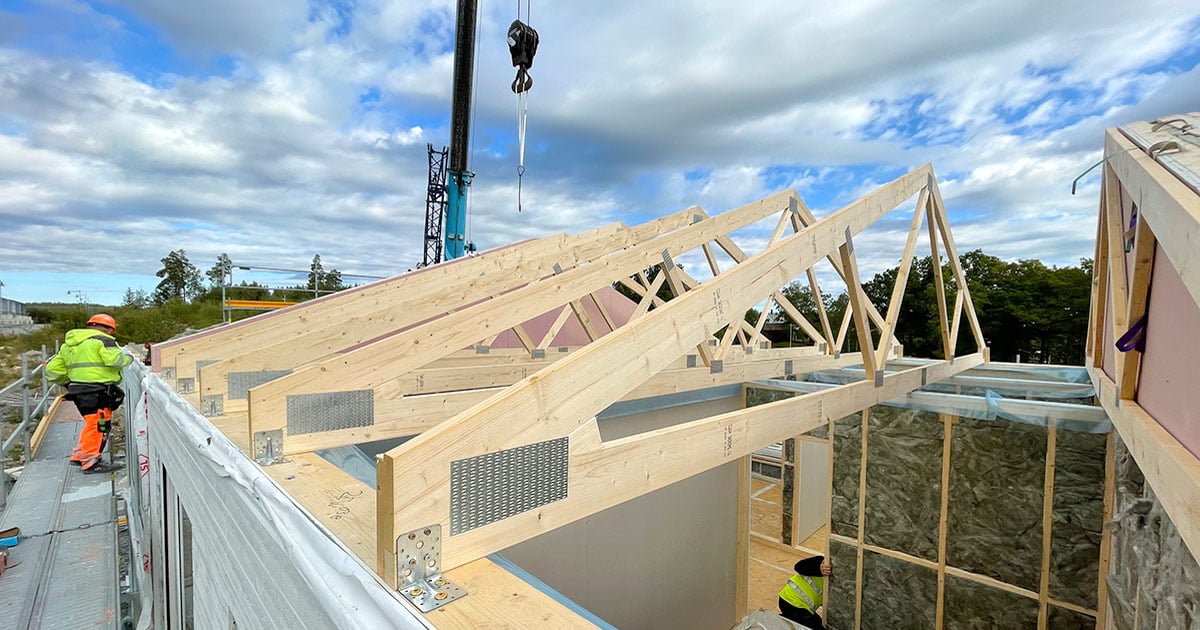
“Turnkey house” sounds simple. One contract, one company, one finished home.
In reality, turnkey construction is rarely that simple, especially when the house is built by an international timber-frame manufacturer and delivered to another country.
This does not mean turnkey is the wrong choice. For some clients it is genuinely convenient, and convenience has real value. But it is worth understanding what the word actually includes, where the costs come from, and why the most efficient solution is not always the largest possible construction scope. This article looks at the practical topics behind turnkey construction so you can choose the right scope and build smart, not expensive:
- The main stages of building a timber-frame house;
- Where a timber-frame manufacturer creates the most value;
- Why turnkey construction usually involves subcontractors;
- Why turnkey moves coordination work, but not most client decisions;
- How coordination margins affect turnkey prices;
- Why specialist trades are usually better for technical and finishing work;
- How local rules and certifications affect electrical, plumbing, heating and ventilation work;
- Why local trades make warranty repairs and after-sales service easier;
- Why foundations, concrete, utility connections and some fittings are local by nature;
- Why interior finishing is personal, variable and often the source of disputes;
- When modular construction comes closest to true turnkey;
- How to compare offers by looking at what they exclude;
- The difference between structural, weather-tight, technically prepared and full turnkey scopes;
- How to divide the work in the most cost-efficient way.
The stages of building a timber-frame house
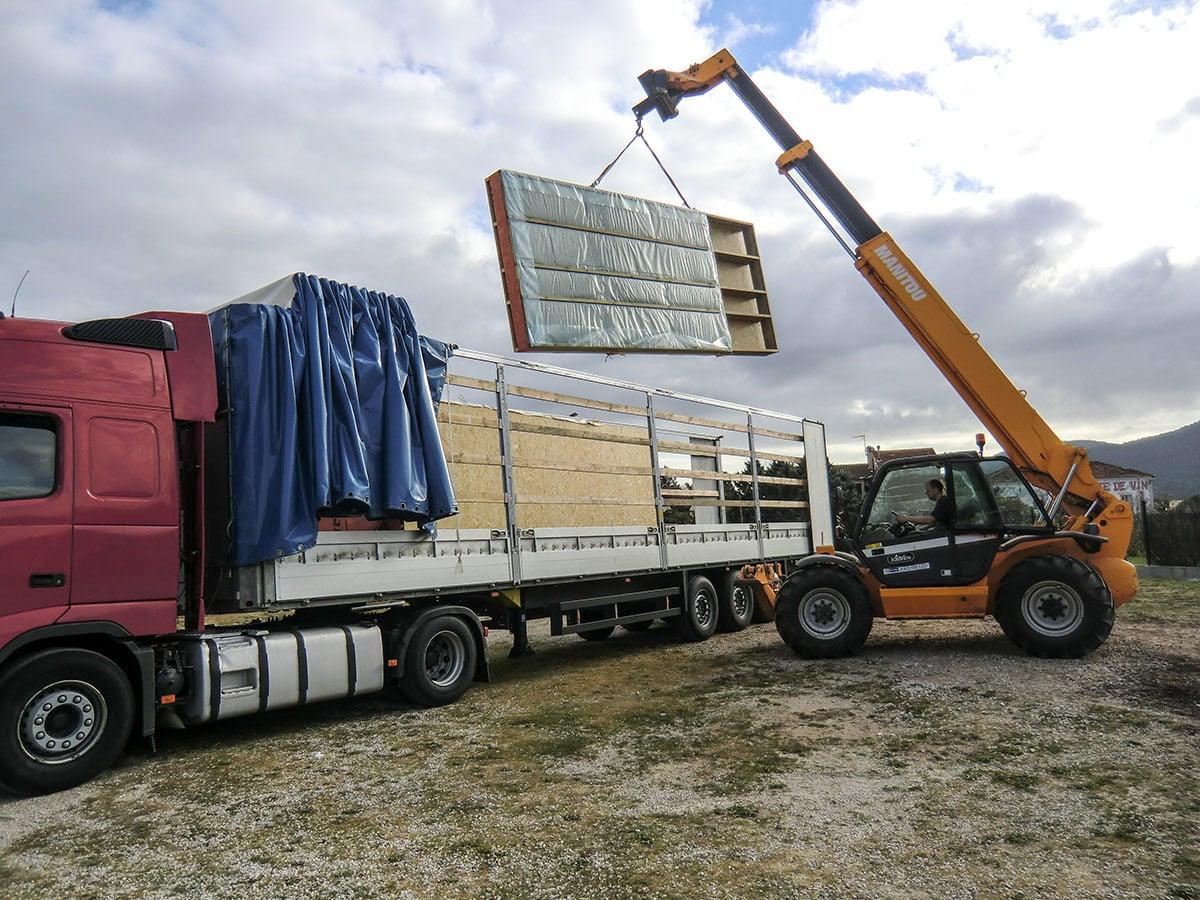
Prefabricated wall panel being unloaded and lifted on site.
Before comparing prices, it helps to stop thinking about “a house” as a single thing and see it as a sequence of very different jobs. A typical project includes:
- architecture, design and building permits;
- site preparation and foundations;
- timber-frame production;
- delivery and assembly;
- roof, windows and the exterior envelope;
- electrical, plumbing, heating and ventilation systems;
- interior finishing;
- final details, documentation and handover.
All of these are often placed under one word: turnkey. But they are not the same type of work. Some stages are best handled by a timber-frame manufacturer. Others are tied tightly to the local plot, local regulations, local suppliers and local inspections. Turnkey does not make those differences disappear; it just hides them inside a single price.
Where a timber-frame manufacturer creates the most value
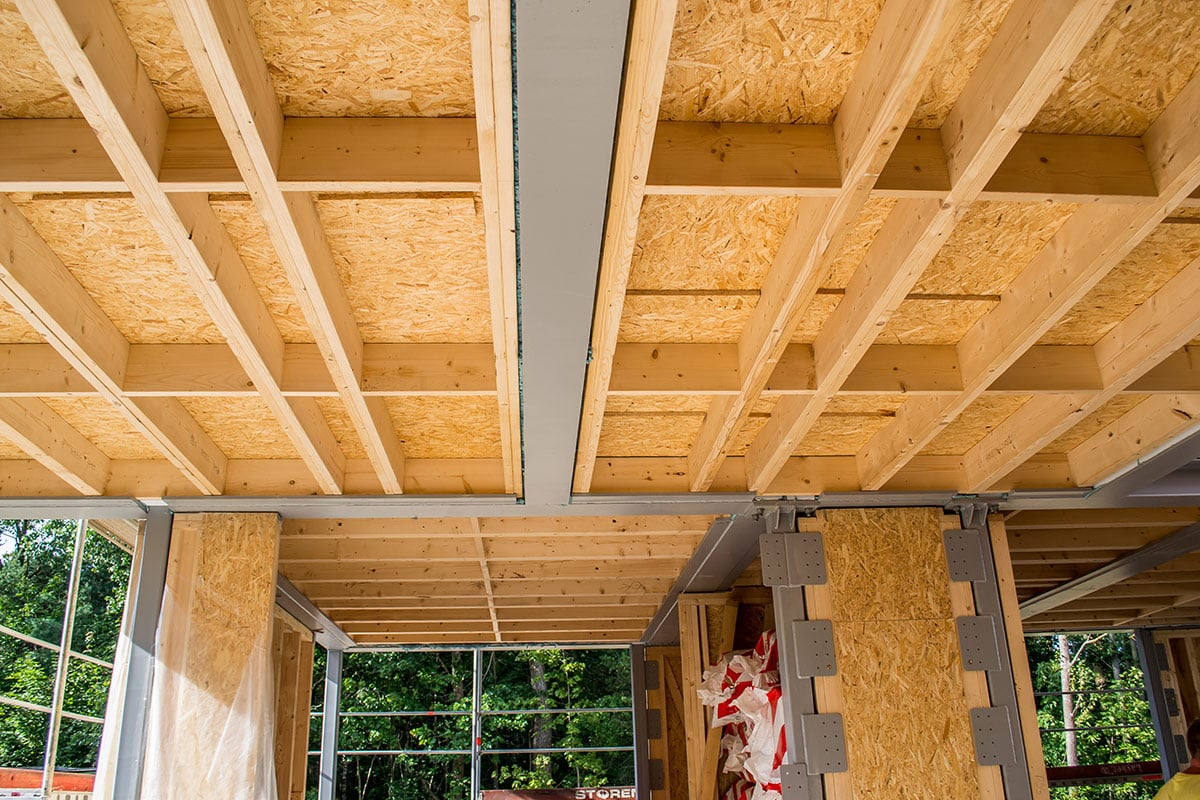
Timber-frame roof and ceiling structure during construction.
The strongest value of a timber-frame manufacturer lies in the house structure itself: engineering, production, material planning, factory-controlled quality, and fast, accurate assembly on site. These are the parts where experience, repetition and specialisation matter most.
A company that builds timber-frame houses every day produces the structure efficiently and precisely, in a controlled environment, with experienced installation teams. This is exactly where choosing an international builder can make financial sense, and where the real cost advantage lives.
The problem starts when the same company is expected to take responsibility for every local and highly specific part of the project.
Turnkey usually means subcontractors
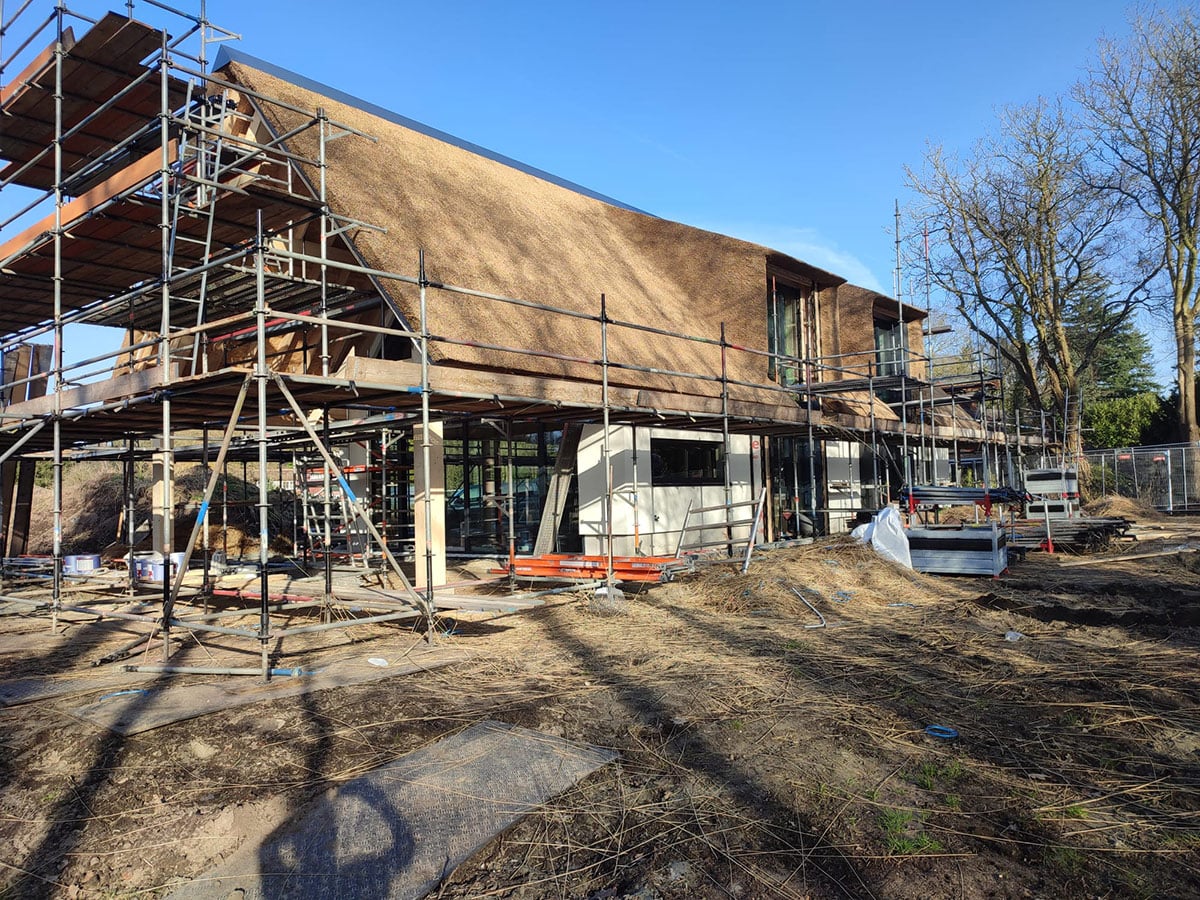
Specialist local roofers installing thatch on a timber-frame house.
A full turnkey offer rarely means one company physically does every job. More often, the client communicates with a single company, while that company coordinates a string of subcontractors: foundation crews, electricians, plumbers, heating and ventilation specialists, tilers, painters and others.
For the client, that is convenient. But convenience has a cost. The main contractor has to manage those subcontractors, carry the risk, handle the communication, absorb possible price changes, and remain responsible for the final result. That management and responsibility have to be paid for, so they are built into the contract price.
In other words, turnkey reduces the client’s coordination work. It does not remove the cost of coordination. It simply moves it into the price.
Turnkey moves the paperwork, not the decisions
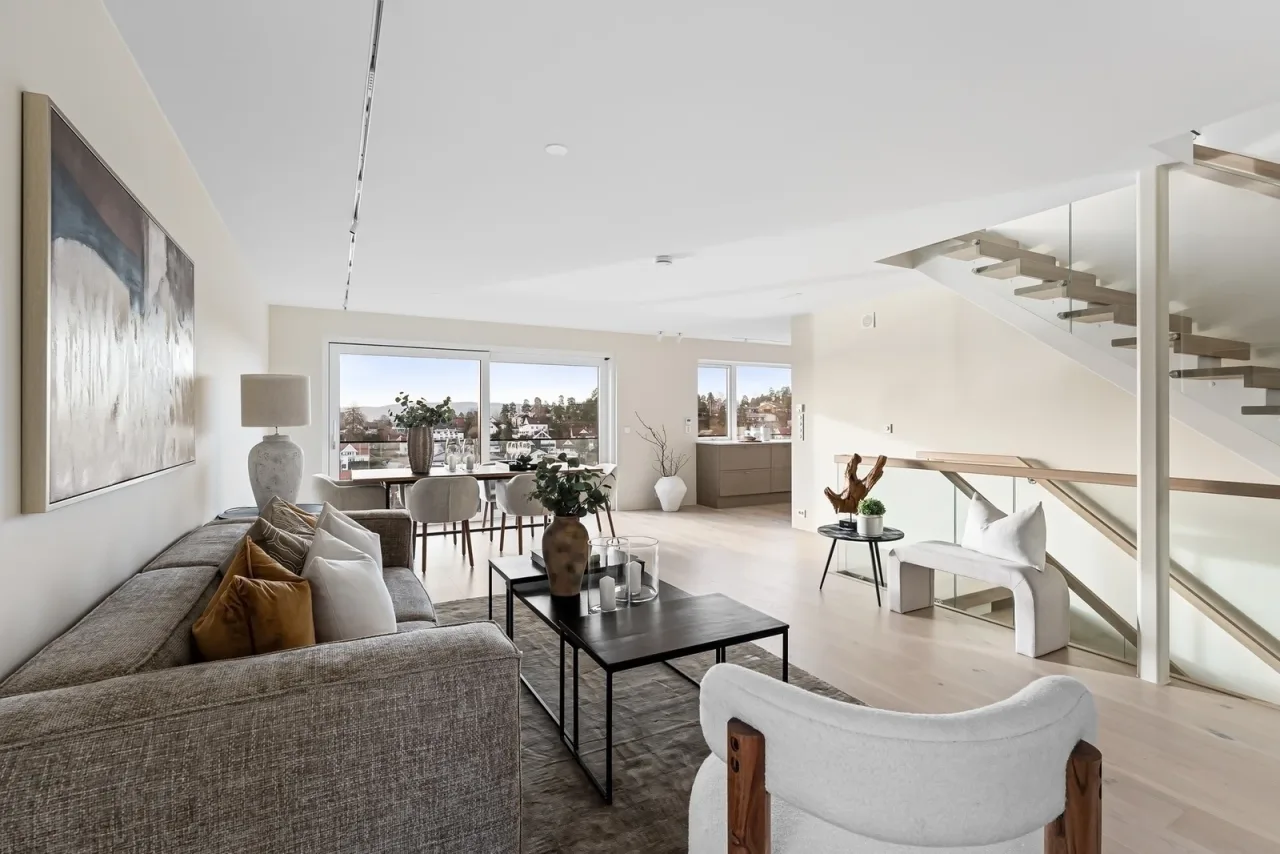
Interior arranged and finished by the client after timber-frame house assembly in Norway.
It’s worth being honest about what turnkey actually removes, because it’s less than it appears. A single contract saves you coordination — one company schedules trades and chases delays, so you’re not calling five firms yourself. It doesn’t save you the decisions: which tile, kitchen layout, flooring, socket placement, bathroom fittings, lighting plan — the builder still has to ask, and you still have to decide. You’re approving the same choices through one company instead of several, which makes the real comparison narrower than it looks.
Split into parts or run as turnkey, you do much of the same work — same selections, same approvals. The difference is administrative: turnkey bills arrive from one company with a coordination margin added; split, the same bills arrive directly from each trade, at their own prices.
There’s a second half to this. If you keep the decisions, turnkey hasn’t saved you much. If you hand them off to make the convenience real, someone still has to choose the tile and fittings — and if it’s not you, it’s them, picking whatever’s easiest to source and best for their margin, not necessarily best for you. So turnkey tends to leave you in one of two spots: stay involved, and the convenience was smaller than promised; step back, and you may be paying for choices optimised around their margins, not your home.
Splitting the work avoids that — you keep control, buy at each trade’s own price, and pay a coordination margin only where you decide it’s worth it.
Why a turnkey price adds a coordination margin
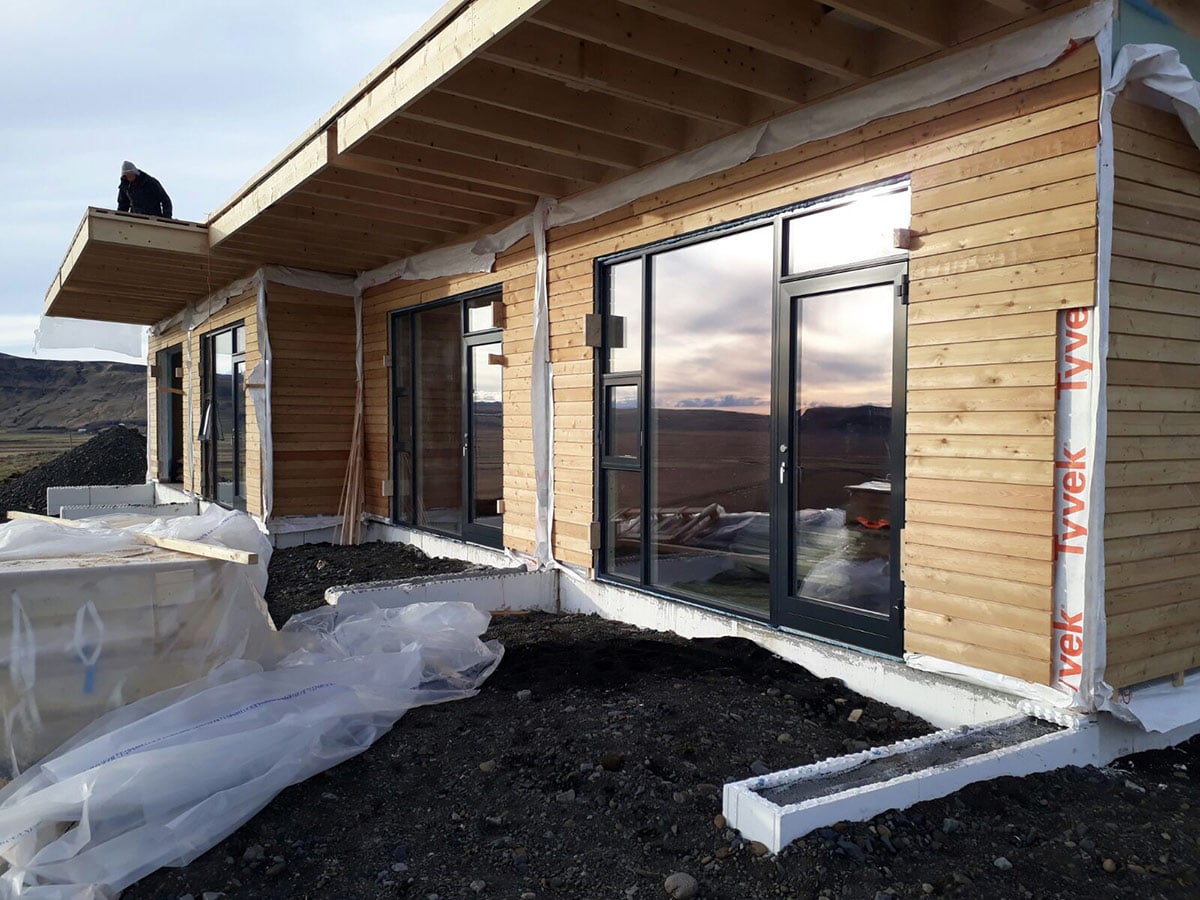
Timber-frame house after window installation and exterior timber cladding.
When a main contractor hires a subcontractor, it does not pass the cost through at face value. It normally adds a margin for coordination, scheduling, supervision, warranty risk and profit. That is not unfair, but it means subcontracted work is rarely passed through at the original subcontractor price.
Now add the cross-border situation. A foreign manufacturer cannot economically bring its own tilers, electricians and plumbers across Europe to do every local job, so for much of the finishing it hires the same local trades you could have hired directly, then adds a margin for coordinating them. You end up paying the local price plus a middleman margin on top.
If your original reason for building with an efficient manufacturer was to control costs, this is the precise point where the saving can quietly leak away.
Specialists do specialist work
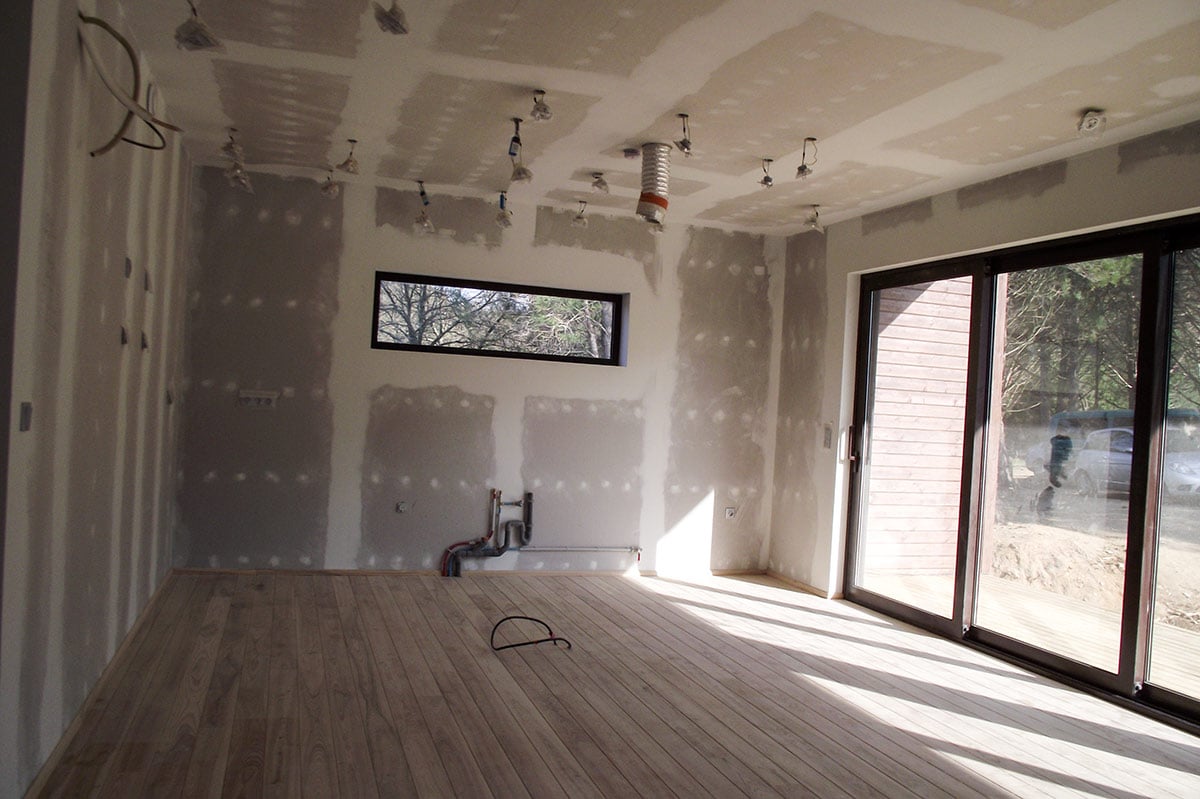
Interior finishing stage with wiring, ventilation and plasterboard work.
Good construction is rarely done by one universal team doing everything. Electricians do electrical work. Heating and ventilation specialists handle technical systems. Foundation contractors deal with groundworks and concrete. Tilers and painters handle finishing. People who do one trade all day, every day, do it faster and better than a generalist.
That creates a dilemma for any company trying to cover the whole build. Keep separate specialist teams on the payroll for every trade, and most of them sit idle most of the time, and idle skilled labour is expensive, so prices rise. Use local subcontractors instead, and prices rise too, because subcontractor costs, coordination and responsibility all have to be included. Either way, the broad turnkey scope tends to chip away at the very price advantage that made an international timber-frame builder attractive in the first place.
Local rules decide who is allowed to do the work
Electrical, plumbing, heating and ventilation work is not only practical work. In most countries it must follow national standards and often requires locally certified or approved installers, with local inspection and sign-off.
The rules vary from country to country, and recognition of a foreign qualification is rarely automatic. A non-exhaustive snapshot of the markets timber-frame homes are commonly delivered to:
- Iceland – construction work is tied to licensed construction management and certified master craftsmen. The Icelandic system includes master builders, masons, plumbers, electricians and tinsmiths, and certified master craftsmen need recognised rights and quality-control systems before taking responsibility for licensed work. Foreign-trained professionals in regulated professions must also have their education or professional rights recognised before working in Iceland. [1] [2] [3]
- Sweden – electrical installation companies, including foreign companies, must register before carrying out electrical installation work, and all electrical installation companies must operate a self-audit scheme. Plumbing and water installations are governed separately by the Säker Vatten industry rules for safe water installation. [1] [2]
- Norway – electrical professionals with education and practice from another country must apply to DSB for approval before practising in Norway, and enterprises performing electrical installation work must be registered in Elvirksomhetsregisteret before they can offer or perform such work. Gas and liquid-fuel installations are also subject to detailed DSB guidance on installation, pipework, ventilation, safety and control. [1] [2]
- Netherlands – work on gas combustion installations, including central-heating boilers, gas fires, gas stoves and boilers, requires CO certification. The certificate is needed for installing, repairing, maintaining and commissioning gas combustion installations and related air-supply and flue-gas ducts; without it, companies are not allowed to perform that work. [1]
- Belgium – in Flanders, domestic electrical installations must be inspected by an authorised inspection organism under AREI when the installation is put into service, modified or extended, the connection is enhanced, or a building with an old installation is sold. Wastewater is also local by nature: where a public sewer network exists, the building owner must connect to it at their own expense; where it does not, wastewater must be treated locally before discharge. [1] [2]
- Luxembourg – operating as a skilled craft business requires a business permit, and the business manager must meet qualification and professional-integrity requirements. Construction-related List A craft trades include building and civil engineering contractors, heating-sanitary-refrigeration installers, electricians, carpenters, roofers, tilers, painters and other specialist trades, with a fixed physical establishment required in Luxembourg. [1]
- Germany – many construction and technical trades fall under regulated craft categories, including building contractors, electricians, heating engineers, plumbers, roofers, carpenters, tilers, painters and other specialist trades. That means a foreign turnkey builder cannot treat these parts as ordinary unregulated labour when organising local work in Germany. [1]
- Switzerland – electrical installations are tied to formal safety documentation under the Low-Voltage Installation Ordinance. A safety certificate must identify the installation, the owner, the applicable standards, the installer and the person authorised to carry out the inspection, and inspection and measurement results must be documented. [1]
- France – for a first electrical connection, the Consuel certificate of conformity is part of the process before the distribution network operator connects the installation. The certificate must be completed by the person responsible for the electrical work, who takes responsibility for the installation. [1]
- United Kingdom – several types of building work can be self-certified only by installers registered under a competent person scheme, instead of going through separate building regulations approval. The listed schemes cover areas such as gas, plumbing and heating, electrical work, windows, insulation, airtightness and other specialist building work. [1]
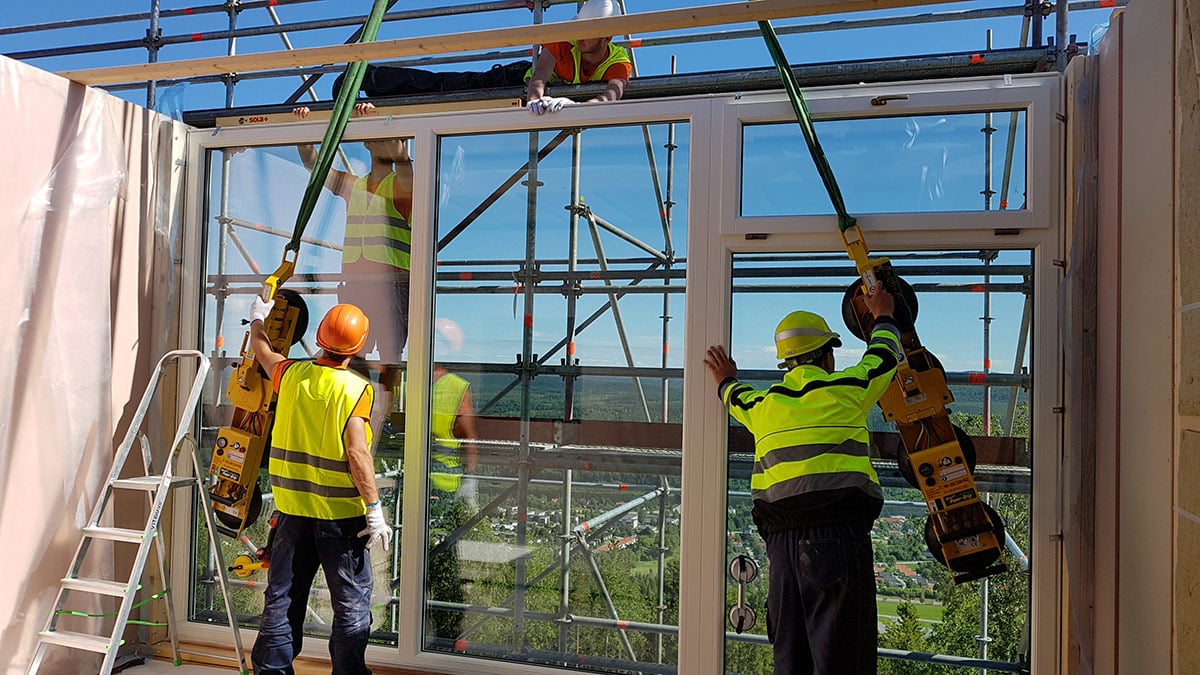
Large window elements being installed on site.
Getting a foreign qualification recognised typically means an assessment or verification process, sometimes supplementary training, often a language requirement, and processing times that can run several months. The practical result: a foreign crew generally cannot simply arrive and legally sign off your electrics, gas or heating abroad. A turnkey foreign builder therefore has to engage locally certified trades for the regulated work anyway, and then add a margin. You would be paying the same local specialists you could engage directly, with an extra management layer in between.
None of this is a problem in itself; it is normal construction reality. But it does change the cost structure. The more of the project that depends on local certification and approval, the less it is about efficient factory production, and the more it becomes about local labour, local rules and local coordination, exactly the parts where an international builder has no special cost advantage.
Why local trades make warranty and repairs easier
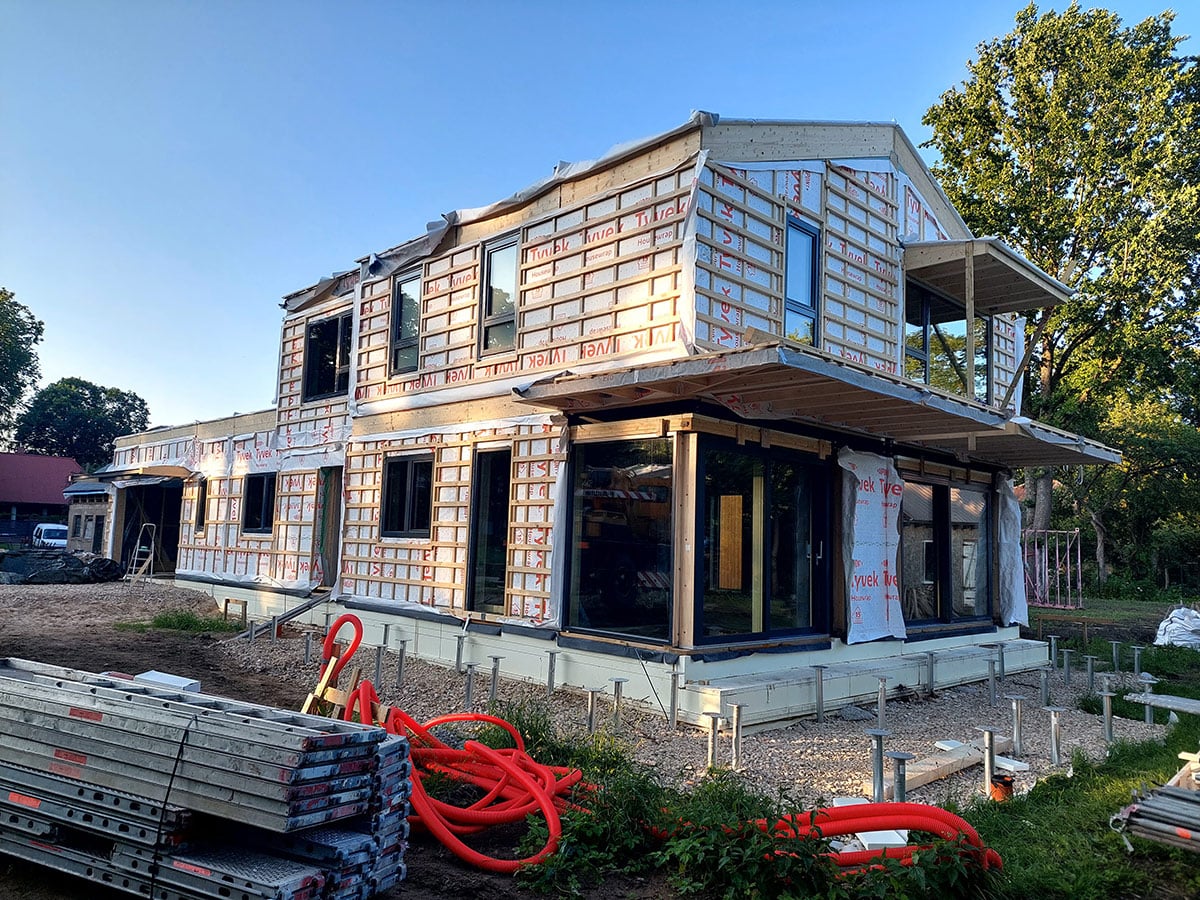
Timber-frame house assembled on site before exterior finishing.
There is also the question of what happens after the keys are handed over. Small finishing issues are normal in any new home: a socket to adjust, a door to realign, a dripping tap, a tile that needs attention. A local electrician or plumber can usually come back within days to put it right. A foreign builder dispatching a team across Europe for half a day of minor fixes is slow and costly, for them and ultimately for you. The more of the finishing that sits with local trades, the faster and cheaper that after-sales service tends to be. The structure itself, by contrast, rarely needs anyone to return at all, which is precisely why it travels well across borders and detailed finishing does not.
Some parts of a house are local by nature
A timber-frame house can be produced in a controlled factory. A plot cannot. Even setting labour aside, parts of a house simply cannot be trucked in from a factory abroad, however efficient that factory is.
Concrete is the clearest example. Ready-mixed concrete stays workable for only about 90 minutes after water meets cement, which is why suppliers deliver within a short radius of the plant. It cannot be produced in Latvia and shipped to the Netherlands or Iceland; it would set long before it arrived. So foundations are always poured and cured on site, by a local supplier and a local crew, against local soil, frost and groundwater conditions. The same goes for screeds and other wet trades, and for utility connections, which are tied to local networks, suppliers and procedures. [1] [2]
Some finished products are effectively local too. Electrical sockets and switches, for example, must match the destination country’s plug and wiring standards, so the visible fittings are usually sourced and certified locally rather than imported.
For these reasons, foundations, connections and wet trades are best handled locally, with clear coordination between the client, local specialists and the house supplier. Forcing them into one international turnkey contract is possible, but rarely the most efficient way to control costs.
Interior finishing is where expectations become personal
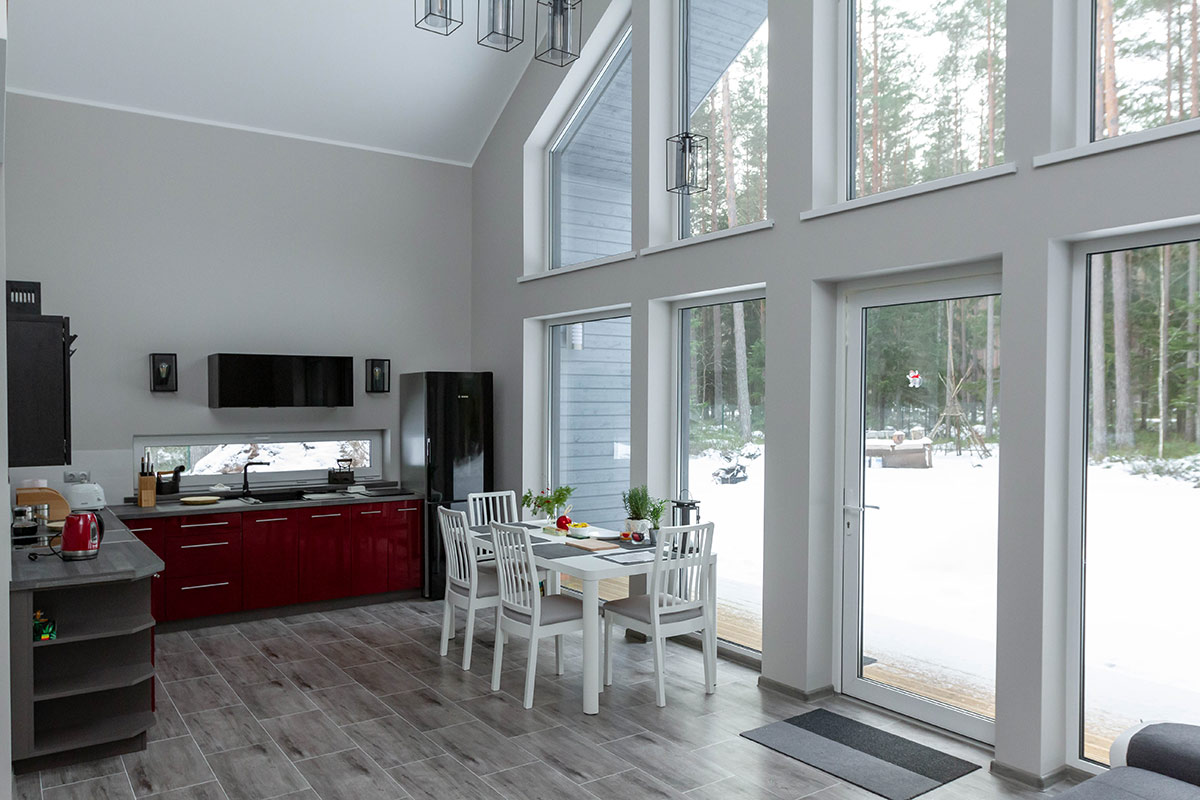
Interior of the VITBŪVE VITA-83 standard timber-frame house design.
The structure of a house is relatively objective. Walls, roof, insulation, windows and assembly quality can all be checked against drawings and technical requirements.
Interior finishing is different. Tiles, flooring, colours, sockets, lighting, bathroom fittings, doors, trims and kitchen details are deeply personal, and this is where small expectations multiply. One client wants basic finishing; another expects premium materials. One wants a simple bathroom; another wants a very specific tile layout, exact fittings and designer lighting.
This is also why a fixed turnkey price for finishing is less solid than it looks. Finishes are exactly the items that change fastest during a project: the tile gets swapped, the kitchen is upgraded, a different tap is chosen, the lighting plan grows. Every one of those choices moves the price. The more freedom you keep over finishes, the less a single “fixed” turnkey figure actually means, because it can only ever be fixed against one specific set of selections, and those selections rarely survive a visit to the showroom.
This is also where, in practice, almost all disputes begin. Nobody argues about whether the walls are airtight; that is what factory production and an experienced assembly team are built to guarantee. Disagreements start over a tile shade, a socket height or a grout line. The wider the turnkey scope becomes, the more the builder is responsible not only for construction quality but for personal taste, and that adds risk, time and cost to the price you pay.
The one case that comes closest to turnkey
There is one exception worth knowing. The more of a building that is finished inside the factory, the closer it can get to a true turnkey hand-off. Compact volumetric modular units take this furthest: a whole room or small building is finished in the factory (structure, insulation, windows, often wiring and interior finishing) and then craned onto the foundation more or less ready to use. For small buildings, that can leave very little to arrange locally.
Panelised timber-frame houses work differently. Because they are assembled from flat panels on site, they still need a locally built foundation, local utility connections, and local permitting and inspection at the destination. The principle holds either way: the more that is finished in the factory, the smaller the on-site scope, and the more of your cost advantage you keep.
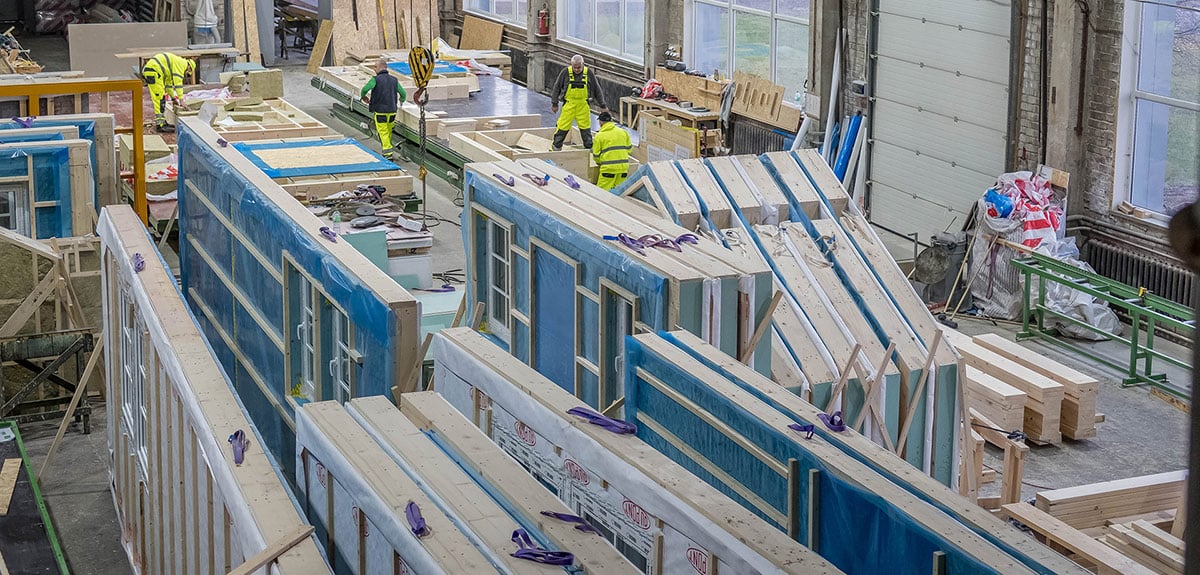
Factory-made timber-frame wall panels prepared for construction.
Compare turnkey offers by what they leave out
Every building offer excludes something; that is normal, not a warning sign. A foundation poured locally, the utility connections, interior finishing by local trades: these are meant to sit outside a manufacturer’s scope, and a straight-dealing builder will say so plainly and even tell you roughly what they will cost. What matters is not whether an offer has exclusions, but whether you can see them clearly before you sign.
The word “turnkey” means different things to different companies, so two “turnkey” totals are rarely comparable on their own. What makes them comparable is a clear, itemised picture of what each one covers and what it does not. So ask each builder the same question: not just “What is included?” but “What is excluded, and what will those parts cost me locally?”
There is a real difference between an exclusion stated up front and one you discover later. “We deliver the weather-tight house; you arrange the foundation and interior finishing locally” is honest scope: you can plan and budget for it from day one. The thing to watch for is the tidy single price that quietly omits site preparation, craneage, scaffolding, customs or waste removal, and only reveals them once the work has started.
Levels of completion: from structural package to full turnkey
Rather than asking only for “turnkey,” it is usually better to compare a few clearly defined levels of completion. In simple terms, a client can choose:
- a structural house package – the timber-frame elements only, for clients who have their own builder or crew;
- a weather-tight house – assembled airtight with the exterior finished, leaving the foundation and interior finishing to local trades;
- a weather-tight house with technical preparation – the same, but with conduits, boxes and service routes built into the panels to make local finishing faster;
- full turnkey – the whole project under a single contract.
There is no single correct answer for every project. The point is to define the scope deliberately and understand which parts create value, and which parts mainly add coordination, local dependency and cost.
The most cost-efficient way to divide the work
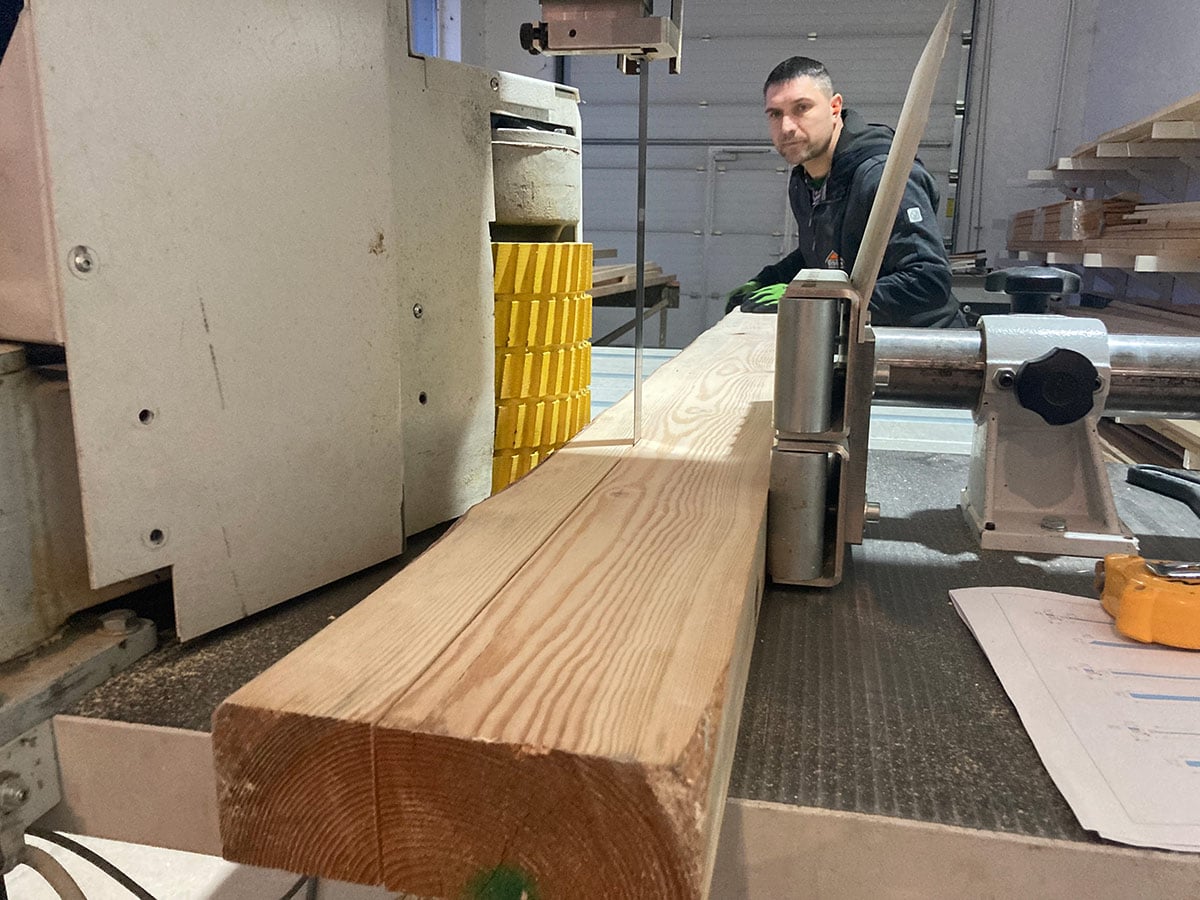
Timber beam being processed during factory production.
Turnkey construction is not wrong, and for clients who place a high value on a single point of contact, it can be the right choice. But it should never be mistaken for the automatically cheapest one.
For many international timber-frame projects, the smartest approach is not to push every task into one contract. It is to divide the project clearly and let each part be handled by whoever is best suited to it. The manufacturer focuses on the structure, production quality and assembly, the part where the real cost advantage lives. Local specialists handle the parts that depend on local rules, local inspections, local materials and personal preference. The result tends to be a more transparent process, better cost control and fewer unnecessary markups.
The goal here is not to avoid responsibility. It is to place each responsibility where it can be handled best and most cost-effectively.
So the real question is not “turnkey: yes or no?” It is this:
Which parts of this house belong in a factory, which parts belong to local trades on my plot, and where would I end up paying twice for the same work while making the same decisions either way?
Answer that, and the right scope tends to choose itself. Instead of asking only for a turnkey price, tell us your project location and the level of completion you have in mind. We can help define which parts make sense for Vitbūve to handle, and which parts are usually more practical to organise locally.